Far-reaching impacts possible from Supreme Court pesticide case
Published 9:17 am Monday, January 26, 2026
Case could pre-empt state ‘duty to warn’ laws
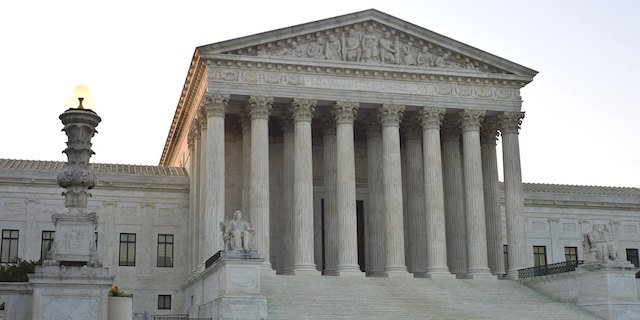
The U.S. Supreme Court’s decision to review a lawsuit over glyphosate’s alleged cancer risks could have much broader effects on pesticide labeling for other products, experts say.
The nation’s highest court has agreed to decide whether federal law should pre-empt the “duty to warn” users about a pesticide’s alleged health risks under state law.
Environmental advocates who didn’t want the Supreme Court to review the case worry that such pre-emption would limit the information that’s available to farmers about pesticide hazards.
“There’s no incentive to protect the farmer when the marketplace does not require the manufacturer to disclose the product’s potential for harm,” said Jay Feldman, executive director of the Beyond Pesticides nonprofit. “It would mean less protection for farmers and other users of pesticides.”
On the other hand, the American Farm Bureau Federation and a coalition of other agriculture groups argue the Federal Insecticide Fungicide and Rodenticide Act, or FIFRA, must pre-empt such “failure to warn” claims under state law to ensure uniform nationwide regulations for pesticides.
“A patchwork of state labeling requirements could lead to contradictory or mutually exclusive statements on pesticide packaging,” according to the farm coalition’s court brief.
Case under review
The lawsuit taken up for review by the Supreme Court is one of many that allege glyphosate herbicides sold as Roundup are responsible for causing non-Hodgkins lymphoma blood cancers.
Bayer, which now owns the Roundup brand after buying its producer, Monsanto, has already paid an estimated $11 billion to settle such cases but many more remain pending.
The company is urging the nation’s highest court to rule that FIFRA establishes a federal system for regulating pesticide labels and thus pre-empts lawsuits filed under state laws that allege a “failure to warn” of cancer dangers.
The American Farm Bureau Federation claims it would be “logistically impossible” for pesticide manufacturers to conform to 50 different labeling regimes, which could endanger the availability of glyphosate and other chemicals.
“Currently, manufacturers face a no-win situation of having to disregard a state pesticide labeling requirement or place a false and misleading statement on a package, contradicting EPA findings and contravening FIFRA,” the group said. “This uncertainty could cause manufacturers to exit the market, which will greatly harm the farmers they serve.”
However, Beyond Pesticides discounts this argument, as the nonprofit believes it’s more likely that pesticide manufacturers would implement nationwide labels warning of potentially adverse consequences for human health.
“There is no hodgepodge here,” said Feldmnan, the group’s executive director. “States won’t issue different warnings.”
FIFRA does not prohibit pesticides if they can cause cancer or other illnesses — instead, the law allows the sale of such products as long as the risk is considered below an acceptable threshold, he said.
If the manufacturer decides to sell a pesticide with possible hazards, the company should be obligated to share that risk with farmers, gardeners and other users, Feldman said.
“You can’t establish a law that allows for harm and then not disclose that to the public,” he said.
Just because the Supreme Court decided to review the case does not necessarily mean that it’s poised to rule in favor of Bayer, the pesticide’s manufacturer, said Brigit Rollins, a staff attorney with the National Agricultural Law Center.
“There’s always a certain amount of reading the tea leaves,”she said.
More likely, the nation’s highest court was interested in taking up the lawsuit because a “circuit split” had developed over pesticide labeling pre-emption among federal appeals courts, she said.
Lower court rulings
The 9th and 11th U.S. Circuit Courts of Appeal have determined that state lawsuits alleging “duty to warn” or “failure to warn” aren’t pre-empted by FIFRA, while the 3rd Circuit has reached the opposite conclusion, Rollins said.
It’s unclear at this point whether the Supreme Court will hear oral arguments in its current term, before its summer break, or in the next term, beginning in autumn, she said.
When it does hear the case, though, questions and comments about the concept of “misbranding” under FIFRA are likely to indicate how the justices are leaning in the case, Rollins said.
The plaintiff in the complaint against Bayer, John Durnell, argues that state law claims are not pre-empted because they run “parallel” to FIFRA’s prohibition against misbranding of pesticides, she said.
“We’re going to be hearing quite a lot about that as we head into oral arguments,” Rollins said.
Potentially, the Supreme Court could “split the baby” and find that federal law only pre-empts some state law claims — depending on how thoroughly a pesticide has been vetted —or rule so narrowly that it only affects the glyphosate claims against Bayer, she said.
However, such a narrow ruling isn’t likely, nor is it desired by Bayer, which clearly prefers an “across-the-board ruling on pre-emption,” Rollins said.
“It has the potential to have far-reaching impacts on pesticide products,” she said.