Idaho expert: Judge’s order will have little effect on fish survival
Published 7:43 am Saturday, February 28, 2026
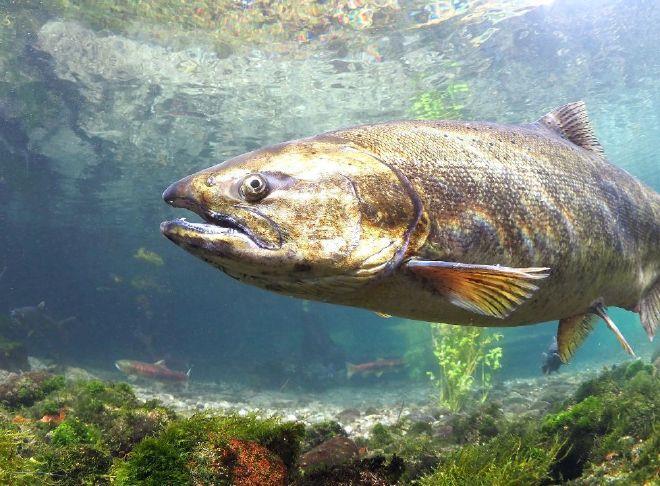
A federal judge’s order to increase the amount of spill over Columbia and Snake river dams won’t have much effect on fish survival, an Idaho expert says.
Judge Michael Simon ordered increase spill over dams and lower reservoir levels on the Columbia and Snake rivers, Environmental and recreation groups asked the court in October to order the emergency measures to benefit endangered salmon and steelhead.
Tim Copeland is wild salmon and steelhead coordinator for the Idaho Department of Fish and Game. Wild fish are valued more highly than hatchery fish in return fish counts.
“Courts tend to act incrementally,” Copeland told Capital Press. “Judge Simon’s order doesn’t stray very far from the recent status quo; therefore, the fish survival outlook won’t change much as a consequence of the Court’s decision.”
Based on that reasoning, Copeland added, most of the opinions he saw in the press in response to Simon’s Feb. 25 order “are exaggerated. On both sides.”
The judge granted relief that continued spill and reservoir levels similar to 2024 and 2025, Copeland noted. Copeland doesn’t expect juvenile survival to change very much from survival observed during those years.
“There may be a devil in the details, but I don’t have the details,” he said.
Increased powerhouse passage
Copeland pointed to Simon’s mention that the federal government’s draft fish operations plan would result in increased powerhouse passage and lower juvenile survival.
Increased bypass encounters are associated with slower fish travel times, lower juvenile survivals and lower smolt-to adult returns, Simon said.
Environmental groups call for higher smolt-to-adult returns (SARs). In 2024, NOAA Fisheries public affairs officer Michael Milstein told Capital Press that NOAA does not rely heavily on SARs as a barometer because they do not capture fish survival across the whole life cycle.
“Moreover, even with increased spill, the (Federal Columbia River Power System) is still the number-one contributor to fish mortality in the Interior Columbia Basin,” Simon says in the injunction.
“There is lots of evidence that powerhouse passage is not good for salmon smolts,” Copeland said. “This is an important part in the judge’s justification for the items he granted versus those not granted.”